TRENDING NOW  ·  Loading date… Market Updates  ·  Crypto  ·  Stocks  ·  Forex  ·  Economy

TradeMatrix News

LIVE
Loading latest headlines…

Latest Trending Stories

TradeMatrix News

Nvidia Blackwell Chips Found in Shanghai Data Centre

· November 27, 2026

Rows of AI server racks inside a large modern data centre representing Nvidia Blackwell hardware in Shanghai

Nvidia shares slipped on Friday after a Bloomberg report said the chipmaker’s restricted Blackwell hardware had been installed at a data centre in Shanghai, renewing scrutiny of how advanced US artificial intelligence chips reach China despite export controls.

According to Investor’s Business Daily, Nvidia fell more than 1% in late-morning trade, lagging a broader market rally in which the Dow Jones Industrial Average climbed 0.9%, the S&P 500 advanced 1.1% and the Nasdaq composite jumped 1.5%.

Nvidia Blackwell hardware traced in loan filings

Bloomberg reported that a GB300 NVL72 rack, among Nvidia’s most powerful products, was installed at the Yangtze River Delta Project in Shanghai, based on a serial number specified in documents submitted to Chinese regulators in November. Shanghai Shuoyao offered the hardware as collateral to obtain a 96 million yuan ($14 million) loan from Shanghai Innovation Bank, according to lender filings reviewed by Bloomberg News.

A second firm, Shanghai Kezhan, described a GB200 server at the same facility, Bloomberg reported. Both systems rely on Nvidia’s Blackwell chips, which TechSpot noted cannot be shipped to China without a US licence. The submissions reveal for the first time that Nvidia’s Blackwell processors found their way into a Chinese data centre with ties to Alice Huang and Singapore-based Megaspeed, according to Bloomberg.

Bloomberg traced the serial number through a public warranty database to Taiwan’s Gigabyte Technology, which assembles Nvidia chips into servers. It remains unclear how the GB300 rack made its way to China, to Shanghai Shuoyao or to the site, which local media have described as designed to house as many as 800,000 servers.

Size of the rack sharpens export-control questions

A standard GB300 NVL72 rack contains 72 Blackwell Ultra chips and 36 Grace processors, stands about two metres tall and can weigh more than 1,500 kilograms, Bloomberg reported. Nvidia chief executive Jensen Huang has previously claimed such systems were too big to smuggle, according to the same report.

Shanghai Shuoyao confirmed in November that it is one of Megaspeed’s service providers, describing the partnership as “limited to ordinary commercial cooperation”, Bloomberg reported. Megaspeed has denied wrongdoing in response to a US probe, and Bloomberg said it does not have evidence that Megaspeed itself diverted Nvidia hardware to the site.

TechSpot also reported Hopper-generation servers from Super Micro Computer and Dell Technologies in a 200 million yuan loan filing by Shanghai Longjie, with US approval for those shipments unclear.

Market context ahead of Senate hearing

Friday’s dip came after a volatile week for the stock. Nvidia shares closed on Wednesday nearly 39% below their 52-week high, Investor’s Business Daily reported, even as the shares remained on track for an 18% weekly gain after Jensen Huang returned as chief executive on Monday.

Investor’s Business Daily also reported that Nvidia’s chief executive is scheduled for a hearing with the US Senate Banking Committee on 3 December. The Bloomberg findings are likely to keep export controls in focus for chip stocks, because the loan filings show only equipment pledged as collateral and therefore represent a small part of what a site of that size would require, TechSpot noted.

No conclusion has been reported on how the rack reached Shanghai. Bloomberg said it gave the serial number to Gigabyte seeking the original buyer and sale date.

Related coverage on TradeMatrix

Tags: #Nvidia #AIChips #Blackwell #ExportControls #StockMarket #DataCentres #China

Sponsored

TradeMatrix News

South Korea ICO Ban Lift Proposed With Strict Disclosure Rules

· November 27, 2026

South Korea ICO ban lift proposal with crypto regulation and digital asset trading in Seoul

South Korea is preparing to reopen domestic token fundraising for the first time in nine years, but only under disclosure rules modelled on public share offerings. According to CoinDesk, the Financial Services Commission (FSC) has proposed allowing initial coin offerings (ICOs), reversing a ban imposed in 2017, as part of a wider digital asset bill presented on 24 November.

The proposal would bring crypto fundraising back under regulatory supervision rather than restoring the lightly regulated market that prompted the original crackdown. South Korea banned ICOs in September 2017, citing fraud, speculation and investor losses, CoinDesk reported. The new framework still requires parliamentary approval before any token sale can take place.

South Korea ICO proposal ends nine-year ban

Under the draft legislation, companies would once again be able to issue and sell new digital assets to investors inside South Korea. Crypto.news reported that the regulator presented the Digital Asset Industry Innovation and User Protection Act during a Virtual Asset Committee meeting chaired by FSC Chairman Lee Eok-won.

John Cho, chief executive and co-founder of Ratio and chief stablecoin officer at the Kaia DLT Foundation, told CoinDesk that regulated ICOs could help South Korean startups raise capital.

Disclosure rules and penalties for false statements

Issuers would have to file white papers detailing their projects, token supply, planned uses of funds and investment risks, along with shorter prospectuses for retail buyers, according to CoinDesk. The FSC would review disclosure filings and could demand corrections, and issuers would have to wait a specified period, potentially seven days, before soliciting buyers.

False statements or omitted information could trigger civil damages, financial penalties and possible criminal prosecution for issuers and executives, CoinDesk reported. Exchanges would also have to publish information about listed tokens and disclose material developments, including hacks and changes in token supply.

Continuing duties after listing

AltcoinDaily reported that exchanges would carry a continuing duty to keep listing disclosures updated after a token lists.

Bank-led won stablecoins and 100% reserves

The same legislation would restrict initial issuance of won-backed stablecoins to consortiums in which licensed banks collectively hold 50% plus one share, according to FXStreet. Crypto.news reported that stablecoin issuers would need minimum equity capital of 5 billion won ($3.71 million), qualified personnel and adequate operating infrastructure.

Issuers would have to maintain reserves covering at least 100% of outstanding tokens and allow holders to redeem their stablecoins without delay, crypto.news reported. Stablecoins with outstanding issuance of at least 1 trillion won could face additional supervision, with the Bank of Korea receiving authority to request joint inspections of their issuers.

Exchange ownership cap and what happens next

The government has also proposed a standard ownership limit of 20% for major shareholders in cryptocurrency exchanges, although qualifying shareholders could hold up to 34% with regulatory approval, according to crypto.news. The measures require parliamentary approval before taking effect, and the legislation was expected to reach the National Assembly by 25 November under the name of Rep. Yoo Dong-su, crypto.news reported.

The next step is National Assembly discussion, which will decide whether South Korea reopens token fundraising or keeps the 2017 ban.

Related coverage on TradeMatrix

Tags: #SouthKorea #ICO #CryptoRegulation #Stablecoins #CryptoMarkets #FSC #DigitalAssets

Sponsored

TradeMatrix News

RBI Eases CRR Rule to 90% as Liquidity Deficit Widens

· November 27, 2026

Reserve Bank of India cash reserve ratio and banking liquidity concept with Indian financial district and banknotes

The Reserve Bank of India has eased a key daily reserve rule for banks as liquidity swung from a large surplus to a deficit, according to Moneycontrol. The move gives lenders more flexibility to manage daily cash positions ahead of the central bank's December policy decision.

RBI CRR maintenance eased to 90%

The RBI has reduced the minimum daily maintenance requirement for the cash reserve ratio (CRR) to 90% from 99%, effective from the fortnight beginning 1 December, Moneycontrol reported. The decision does not change the overall CRR rate or the average reserve requirement over the reporting fortnight.

Banks must maintain the prescribed CRR as a fortnightly average, while also meeting a minimum proportion every day. The lower floor gives banks more room to vary daily balances.

The RBI had raised the floor from 90% to 99% effective 16 October, when liquidity was in substantial surplus, to keep overnight money-market rates aligned with the repo rate, according to Moneycontrol.

Liquidity deficit widens as call rate rises

The liquidity deficit widened to Rs 47,641.20 crore on 26 November from Rs 32,216 crore a day earlier, according to RBI data cited by Moneycontrol. The weighted average call rate stood at 5.76% on 27 November, above the RBI's marginal standing facility rate of 5.75%.

Pressure was also visible in Friday's liquidity operations. Banks bid Rs 1.35 lakh crore at the RBI's three-day variable rate repo auction against Rs 75,000 crore on offer. The RBI allotted Rs 75,006 crore at a weighted average rate of 5.66%, with funds to be reversed on 30 November, according to the report.

Liquidity has reversed sharply since September, when the surplus peaked at around Rs 11.16 lakh crore. The RBI later absorbed excess funds through variable rate reverse repo auctions and open market operation sales, including a Rs 25,000 crore sale in October, Moneycontrol reported.

Tax flows and dollar sales drained cash

The surplus narrowed as GST and other tax collections moved funds into the government's account with the RBI, while currency in circulation rose by a little over Rs 2.5 lakh crore between April and 13 November, according to the report. Net dollar sales of around $6.4 billion between 15 October and 13 November also withdrew rupee liquidity.

Gaura Sengupta, chief economist at IDFC First Bank, was quoted by Moneycontrol as saying the 99% requirement was introduced to keep the call rate close to the repo rate, but it is no longer necessary with liquidity expected to remain in deficit through the fourth quarter.

December policy decision in focus

The change comes ahead of the RBI Monetary Policy Committee decision on 4 December. Business Standard reported that Nomura raised its forecast for a December hike to 50 basis points, assigning a 60% probability to that outcome, while Bank of Baroda expects a smaller 25-basis-point increase.

Nomura cited sharper food-price rises and expects inflation to reach around 6.4% in November from 6.1% in October, Business Standard reported. Bank of Baroda flagged October retail inflation of 6.1%, food and beverages inflation of 8.5% and core inflation of 4.5%.

For now, the CRR adjustment is a liquidity-management step rather than a change to the overall reserve burden. Economists estimate core liquidity has fallen to around Rs 6.2 lakh crore and could drop to Rs 2 lakh crore by March-end, Moneycontrol reported.

Related coverage on TradeMatrix

Tags: #RBI #CRR #IndianBanks #Liquidity #InterestRates #IndiaEconomy #CentralBanks

Sponsored

TradeMatrix News

France GDP Contracts 0.2% as Exports and Investment Fall

· November 27, 2026

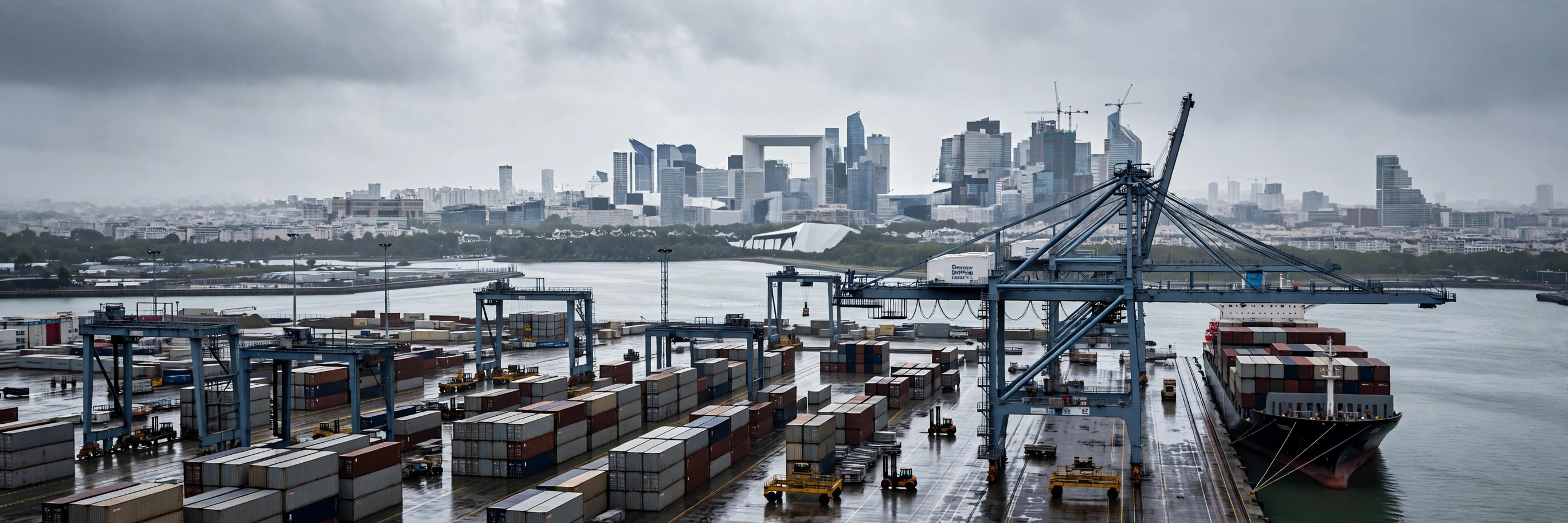
Paris business district and French export port cranes illustrating France GDP contraction as exports and investment fall

France's economy shrank more than first thought in the third quarter, as a sharp fall in exports and a deeper drop in investment outweighed a modest rise in household spending. Final data from statistics office INSEE, reported by Reuters on Friday, showed gross domestic product contracted by 0.2% from the previous quarter, a weaker reading than the preliminary estimate of a 0.1% decline.

The revision also came in below the average forecast of -0.1% in a Reuters poll of 22 economists. According to Reuters, the figures meant France technically dipped into recession, while INSEE put annual carry-over growth for 2026 at just 0.1% at the end of the third quarter.

France GDP contracts more than expected

INSEE's final third-quarter data showed output falling faster than initially measured, with the downward revision linked to weaker construction investment and softer activity in information and communication services, according to Xinhua's report of the release. Compared with a year earlier, GDP also contracted by 0.2%, CME Group's summary of the data showed, down from a flash estimate of minus 0.1%.

Domestic demand offered little support. Household consumption rose by 0.3% in the third quarter, slightly faster than the 0.2% increase in the second quarter, Reuters reported. Government consumption also rose by 0.3%, down from 0.4% in the previous quarter, Xinhua reported, leaving final domestic demand excluding inventories making no contribution to growth, compared with 0.1 percentage points in the second quarter.

Exports reverse as trade drags on growth

Foreign trade was the main drag on output. Exports fell by 1.6% in the third quarter after rising by 2.9% in the second quarter, while imports edged up by just 0.1%, according to INSEE data reported by Reuters and Xinhua. As a result, foreign trade subtracted 0.6 percentage points from GDP growth, reversing a positive contribution of 0.6 percentage points in the previous quarter.

Le Monde reported that a drop in aeronautics exports and agricultural production helped turn trade from a support for growth into a drag during the quarter. Inventories moved in the opposite direction, adding 0.3 percentage points to growth, CME Group's summary showed, but that was not enough to offset the trade and investment declines.

Investment falls for a third straight quarter

Investment weakened further, with gross fixed capital formation falling by 0.9% after a 0.5% decline in the previous three months, Reuters reported. CME Group's breakdown showed investment in manufactured goods down 1.8% and construction investment down 0.9%, while business investment fell by 0.8% and household investment slid by 1.9%.

The downturn also weighed on public finances. Le Monde reported that the public deficit widened to 5.6% of GDP, compared with 5.3% in the second quarter and a government target of 5.4%, as spending rose by €3.7 billion, including €1.4 billion in welfare benefits and €1.2 billion in debt interest payments. INSEE put the 12-month price increase at 2.9% at the end of November, down from 3.4% at the end of October, Le Monde reported.

What happens next for France and the eurozone

With carry-over growth at 0.1%, France would record only 0.1% growth for 2026 if fourth-quarter output were flat, Le Monde reported. Free Malaysia Today reported that the weaker third-quarter reading further jeopardised the government's full-year growth target as it tries to pass deep spending cuts.

For the wider eurozone, the figures add to the picture facing European Central Bank policymakers ahead of their December decision. Traders will now look to fourth-quarter activity data and the next INSEE releases for signs of whether exports and investment stabilise.

Related coverage on TradeMatrix

Tags: #FranceGDP #EurozoneEconomy #INSEE #Exports #Investment #Recession #Eurozone #Economy

Sponsored

TradeMatrix News

Silver Price Jumps 10% as Platinum, Gold Rally Friday

· November 27, 2026

Silver and gold bullion bars beside rising commodities charts as platinum and copper prices rally in Friday trading

Silver prices jumped sharply on Friday as metals led a broad commodities rally in holiday-thinned trading, with platinum, palladium, copper and gold also posting strong gains in the London morning.

December silver stood 10.10% higher at $44.105 an ounce in CME's 08:27 GMT quote, measured against Wednesday's settlement, according to The Edge commodities wrap published at 09:21 GMT. December gold rose by a smaller 3.89% to $3,673.40 an ounce over the same comparison.

Silver price leads a broad metals surge

The advance extended well beyond silver. January platinum climbed 8.56% to $1,348.80 an ounce, while December palladium rose 8.43% to $903.00 an ounce, according to the same CME and NYMEX quotes reported by The Edge.

December copper added 5.13% to $5.6100 a pound, making it the fourth metal in the wrap to gain more than 5% against Wednesday's settlements. The Edge said the exchange pages and wire coverage it read offered no explanation for the surge in silver, platinum or palladium.

That absence of a single reported catalyst matters for how the move is read. The figures are intraday quotes rather than official settlements, and The Edge noted that official settlements will replace the intraday figures once the exchanges publish them.

Gold steadies after a choppy week

Gold's rise came amid a United States holiday lull that calmed AI-driven market jitters, Reuters reported, according to The Edge. Separate Reuters coverage carried by Moneycontrol put spot bullion near $3,565 an ounce, on track for a modest weekly gain after sinking to a 15-month low earlier in a week of choppy trading.

Traders were weighing the prospect of Federal Reserve interest-rate hikes against a wider market recovery spurred by a rebound in United States technology stocks, Reuters reported. The dollar index was steady at 103.81, after reaching 104.53 on Monday, its highest level since March last year, according to Reuters.

Energy joins the move

Crude oil also rose. January West Texas Intermediate gained 2.71% to $85.95 a barrel and January Brent added 1.33% to $97.85 a barrel in the quotes reported by The Edge. Reuters said crude rose amid supply concerns heightened by attacks on tankers in the Strait of Hormuz and on Saudi energy infrastructure.

Oil was on track for its first weekly gain this month, Reuters reported, with Brent up 4.5% this week near $97 a barrel. January natural gas was the exception in The Edge wrap, falling 1.80% to $3.592 per million Btu.

What happens next for metals markets

Attention now turns to whether the intraday metals gains hold once official settlements are published and United States markets reopen for a shortened Black Friday session. Seven OPEC+ countries meet on Sunday, according to an earlier OPEC statement cited by The Edge, which gave no time for the meeting.

For silver and the other metals, the next reported markers are the exchange settlements that will replace Friday's early quotes, alongside the dollar and Federal Reserve rate expectations that Reuters said traders were weighing against the recovery in global markets.

Related coverage on TradeMatrix

Tags: #Silver #Gold #Platinum #Copper #Commodities #Metals #OilPrices

Sponsored

TradeMatrix News

XRP Ledger Lending One Vote Short as Vaults Near Dec 9

· November 27, 2026

XRP Ledger lending vaults and stablecoin reserves in a modern digital finance data centre as validators vote on native lending

Ripple's plan to bring native lending to the XRP Ledger moved within one validator vote of its next stage on Friday, according to voting data reported by CoinDesk and crypto.news. The lending amendment held support from 28 of 35 trusted validators, exactly 80%, while the separate vault amendment that would hold lenders' funds had already reached 29 votes and is on track to activate on 9 December if that support holds.

XRP Ledger lending needs one more validator vote

Under the XRP Ledger's amendment rules, a proposed change must maintain more than 80% validator support for two consecutive weeks before it can become active on mainnet, according to crypto.news. With 35 trusted validators, that threshold means at least 29 supporting votes, or about 82.9%.

Data from the XRPL Dashboard on 27 November showed the LendingProtocol amendment at 28 votes, one short of starting its two-week approval countdown, crypto.news reported. A related amendment, LendingProtocolV1_1, which covers vault accounting and withdrawal arrangements, also held 28 votes, according to the same report.

The companion SingleAssetVault amendment entered its mandatory two-week approval period on 25 November after reaching 29 votes, and is projected to activate on 9 December at around 19:38 UTC provided validator support remains uninterrupted, according to crypto.news.

Vaults could open before loans can be funded

CoinDesk reported that the deposit pools, known as vaults, could open on 9 December if their 29 votes hold, but they cannot fund loans until the separate lending proposal takes effect. The plan would let stablecoin holders earn interest by funding fixed-term loans without collateral on the ledger, leaving depositors to rely on brokers to vet borrowers and cover losses the brokers have pledged to absorb, according to CoinDesk.

Support has built steadily over the past month. Crypto.news reported that the lending proposal had secured 19 votes on 19 October, while SingleAssetVault had received 21. By 23 November, support had risen to 24 and 25 votes respectively, before reaching 28 and 29 this week.

CoinDesk noted that both amendments had gained six votes since its previous count on 12 November, after lending had added only three votes in the three weeks before that, pointing to a recent acceleration in validator backing.

$837 million in stablecoins in focus

The stakes centre on the stablecoin balances already sitting on the network. Data from DefiLlama showed the XRP Ledger held $837.04 million in stablecoins on 27 November, with Ripple's RLUSD accounting for approximately 89.39% of the total, according to crypto.news. CoinDesk put the figure at about $837 million, while the network's decentralised finance applications held about $30.5 million, according to DefiLlama data cited in its report.

That gap underlines why the lending system matters for the ledger's finance ambitions: the vaults would give those stablecoin balances a native route into lending markets, rather than leaving them largely idle. Until the lending amendment clears its threshold and completes its own two-week countdown, however, borrowing cannot begin.

What happens next

The immediate markers are whether the lending amendment wins its 29th vote and whether SingleAssetVault support stays above 80% through its 9 December window. CoinDesk noted that the approval process remains vulnerable to delays if support slips, citing an earlier bug-fix amendment that lost its majority for about two hours on 21 October, resetting its clock and pushing activation from 23 October to 4 November.

For now, the XRP Ledger lending proposal sits one vote from its countdown, with the vaults a step ahead. Whether the final vote arrives in the coming days will decide if December brings the network's first native lending pools into operation.

Related coverage on TradeMatrix

Tags: #XRP #Ripple #XRPLedger #Crypto #Stablecoins #Lending #RLUSD #DeFi

Sponsored

TradeMatrix News

LayerZero ZRO Jumps 13% as Kakao Pay Joins Zero Validators

· November 26, 2026

LayerZero Zero blockchain validators Kakao Pay Samsung Card and ZAN securing an Asian financial network ahead of the mainnet launch

LayerZero's ZRO token rose nearly 13% in 24 hours as the protocol named Kakao Pay, Samsung Card and ZAN as genesis validators for Zero, its new blockchain for financial markets, according to KuCoin's daily market report for 27 November. The appointments, announced on 25 November, put established Asian payments and technology firms inside the network's security set just days before Zero's scheduled mainnet launch on 30 November.

LayerZero Zero Validators Add Asian Finance Heavyweights

The three firms will join the mainnet as genesis validators and help secure Zero's consensus and proof-verification system from launch, The Block reported. Four Pillars will operate Samsung Card's validator node.

Kakao Pay, linked to South Korea's largest mobile messaging app, has roughly 26 million monthly users, and LayerZero says it processed more than $100 billion in transaction volume during 2025. Samsung Card had approximately 13.92 million cardholders at the end of September, while ZAN, the Web3 infrastructure platform backed by Ant Digital Technologies, provides node services across more than 80 blockchain networks.

LayerZero chief executive Bryan Pellegrino said the additions are meant to give Zero a globally distributed validator set across Asia, Europe and North America. Kakao Pay chief executive Shin Won-keun said the company plans to explore the Zero network to bridge traditional finance and onchain markets, including initiatives based on stablecoins pegged to the South Korean won.

How Zero Separates Execution From Verification

Zero is a Layer 1 blockchain designed primarily for institutional and global financial markets, including tokenised assets, payments and round-the-clock trading. Unlike most blockchains, which re-execute every transaction, Zero uses zero-knowledge proofs to separate execution from verification, leaving validators to check cryptographic proofs that the work was done correctly, LayerZero said.

The network will launch alongside ATLAS, LayerZero's trading infrastructure designed to combine order matching, clearing, settlement and risk management in one technology stack. LayerZero's specifications indicate ATLAS will initially support more than 250,000 transactions per second, although that reflects announced testing capacity, not independently established live results.

Validator Seats Are Not Yet Commercial Adoption

Validator participation does not establish that either firm will migrate payment transactions onto Zero; neither has disclosed a commercial processing commitment, expected volumes or revenue.

ZRO Staking, ATLAS Fees and What Happens Next

The launch also expands ZRO's role: the token will secure Zero through staking, pay network gas fees and take part in protocol governance. Pre-genesis staking opened on 23 November, and staked ZRO will be distributed equally across genesis validators until 31 March 2027, rather than letting holders pick individual operators at the outset.

The initial staking programme targets a 1% annual token issuance rate, with validators receiving a fixed 10% commission until 31 March 2027. Staked tokens and accrued rewards remain locked until that date, after which withdrawals face a cooldown of up to seven days. Under the ATLAS model, venues receive 20% to 65% rebates, and 75% of remaining fees is allocated to buying and burning ZRO.

The test is the 30 November launch: whether validators come online as planned and venues generate sustained ATLAS activity.

Related coverage on TradeMatrix

Tags: #LayerZero #ZRO #Crypto #Blockchain #KakaoPay #SamsungCard #Tokenisation

Sponsored

Powered by Blogger.

Blog Archive

Nvidia Blackwell Chips Found in Shanghai Data Centre

Nvidia shares slipped on Friday after a Bloomberg report said the chipmaker’s restricted Blackwell hardware had been installed at a data ce...