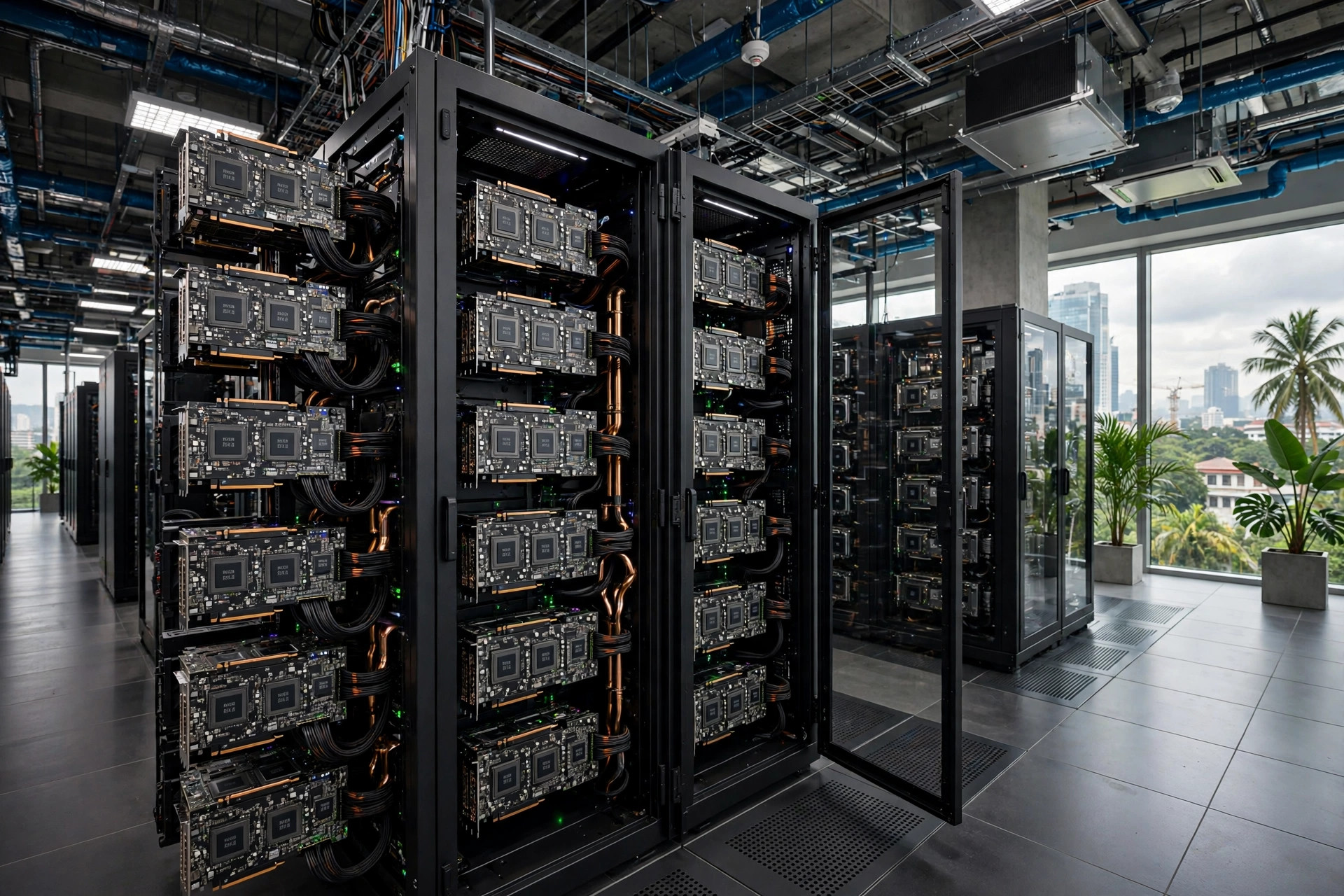
Nvidia has reportedly told manufacturing partners to stop shipping AI servers to Malaysia, Singapore, Thailand and Indonesia, according to the Financial Times, as new United States export controls tighten access to advanced computing power. The report, cited by Reuters and Channel News Asia, said partners including Dell and Supermicro told buyers in the four countries that Nvidia would not allow their orders to be shipped.
Nvidia AI Server Shipments Halted as US Controls Tighten
The Financial Times report was based on three people with knowledge of the matter, according to Reuters, which said it could not immediately verify the report. Channel News Asia, republishing the Financial Times story, said Nvidia declined to comment, while Dell and Supermicro did not respond to requests for comment. The reports said it was unclear whether the halt is temporary while Nvidia and its partners work out how to comply with the new US rules.
For investors, the key question is duration. The reports did not value the affected orders, so the revenue impact cannot yet be measured.
New Licence Rules Target Diversion Risk
The move follows US Commerce Department rules introduced last week, according to the reports. The Bureau of Industry and Security rule requires a licence to export, re-export or transfer advanced semiconductors to Indonesia, Malaysia, Singapore, Thailand or Brazil, which the bureau described as countries with a higher-than-normal risk of diversion, according to summaries of the rule cited by Barron's and TechRepublic.
The four Southeast Asian countries in the Nvidia report have become favoured destinations for Chinese AI developers seeking access to Nvidia's most advanced chips, whose exports are restricted by Washington, according to Channel News Asia. The reports said Chinese firms have used overseas cloud providers to rent computing power from servers containing those chips, a route the new US rules are designed to close.
Cloud Providers Face a 90-Day Licence Window
Channel News Asia reported that the Commerce Department has set a 90-day deadline for cloud providers to obtain a licence by proving that their end users do not include restricted entities. TechRepublic reported that the rule is not a blanket import ban: qualifying US-headquartered end users, and companies whose ultimate parents are headquartered in the United States, are excluded from the destination-based licensing requirement, subject to reporting obligations.
What Happens Next for Nvidia and Server Makers
Attention now turns to whether Nvidia, Dell and Supermicro confirm the halt and explain how long it will last. If licences are granted for legitimate end users, shipments could resume under stricter checks. If approvals take longer, buyers in the four countries may face delayed AI capacity, and server makers may need to rework delivery schedules.
The reports also leave open how the rules will affect data-centre projects that planned to sell computing power to Chinese companies. Chosun Biz reported that some operators had moved to sell Nvidia's latest AI chips and that bank loans for related projects were put on hold, although that account was not independently confirmed by the companies named in the other reports.
For now, the facts are narrow: a reported halt, a licence rule effective 19 November, and no Nvidia comment in the reports reviewed.
Related coverage on TradeMatrix
- Amazon Buys Decart AI Tech in $7.5bn Deal to Rival Nvidia
- Nasdaq Falls 2.5% as Nvidia Rally Fades Ahead of PCE Report
- HPE Shares Jump 6% as Q4 Earnings Test AI Server Boom
Tags: #Nvidia #AIChips #ExportControls #StockMarket #Technology #DataCentres #Semiconductors
Comments (0)