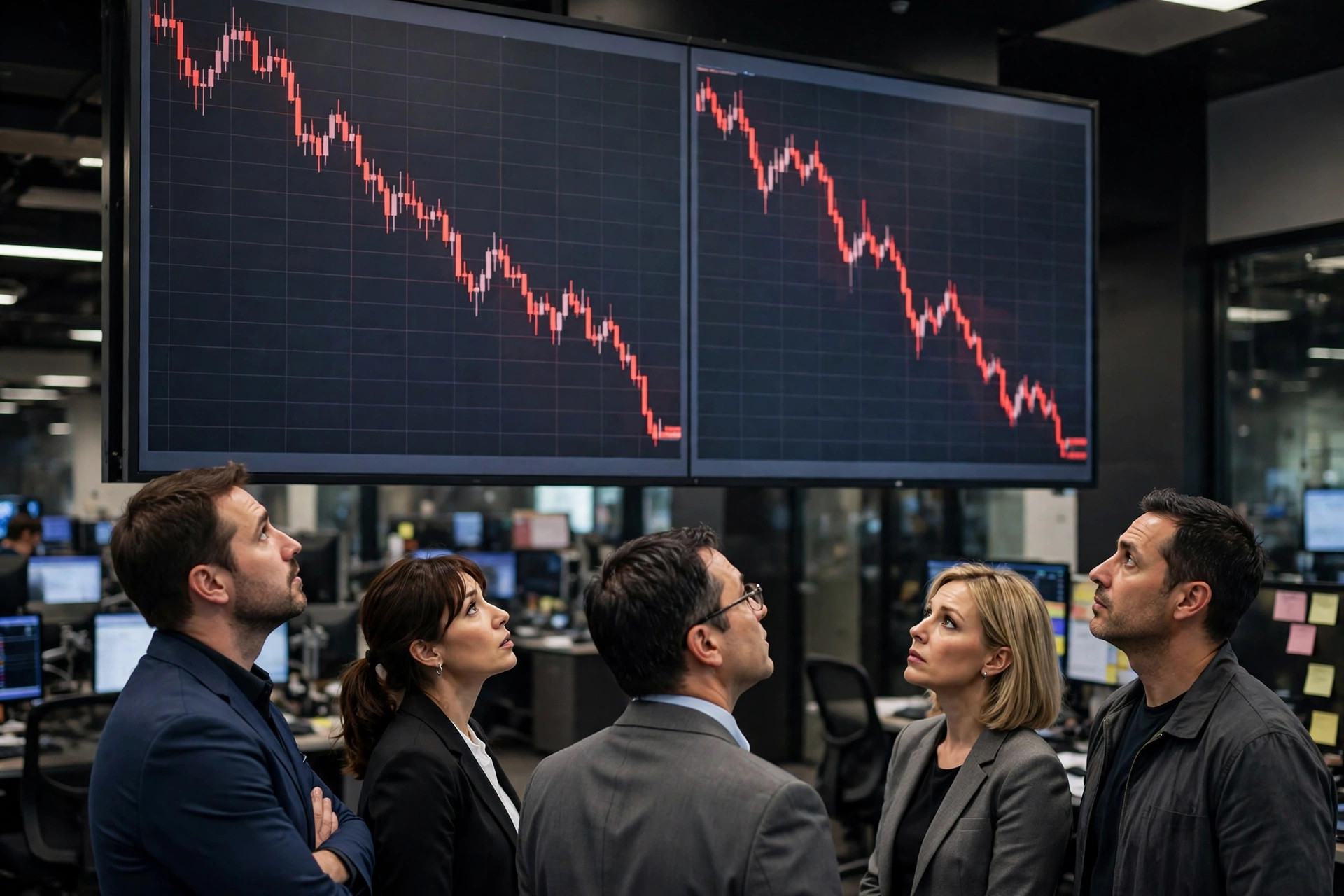
US stocks gave back a large part of Monday's historic rally on Tuesday, as the Nasdaq Composite fell 2.5% and the S&P 500 lost 1.2%, with Nvidia leading chip stocks lower and investors turning their attention to Wednesday's inflation report. The pullback came just a day after Wall Street posted its best session since April 2025, leaving traders to weigh whether the rebound had staying power.
Nvidia Gives Back Gains After 31% Surge
Nvidia fell more than 8% on Tuesday, according to Barchart, surrendering a chunk of Monday's 31.5% surge after the company's board reinstated Jensen Huang as president and chief executive. The S&P 500 information technology index fell 3.4%, the worst-performing sector of the day, as the AI-linked rally that powered Monday's gains unravelled. At 11.36am ET, the Dow Jones Industrial Average was up 0.08% at 49,635.67, while the S&P 500 stood at 7,150.51 and the Nasdaq Composite at 23,493.83, according to The Edge Malaysia.
Market watchers noted that the retreat was not confined to one name. According to Barchart, the Nasdaq 100 fell 2.56% on the day, and concerns about the returns on vast AI buildout spending, tighter regulation and higher borrowing costs continued to weigh on sentiment. The whipsaw follows a brutal week in which the S&P 500 fell 8.6% and the Nasdaq dropped 10%, according to RS Capital, before Monday's rebound.
Tariff Report Adds to the Pressure
Losses accelerated during the session after the Wall Street Journal reported that the US is preparing to raise tariffs on China and other countries that the Trump administration argues are harming American companies by supporting their own domestic industrial production, according to Barchart. The report revived trade worries that had eased during Monday's rally and put fresh pressure on export-exposed shares.
Stocks did recover from their worst levels of the day after US consumer confidence rose more than expected. The Conference Board's November consumer confidence index climbed 11.4 points to 103.3, a 1.75-year high and well above expectations of 92.4, according to Barchart.
Fed Hike Bets Firm Ahead of PCE Data
Attention now turns to Wednesday's US PCE inflation report, the final major economic release before the Federal Reserve's December 8-9 meeting. Core PCE is forecast at 3.2% year on year, up from 3.1% previously, while headline PCE is expected at 3.8%, up from 3.6%, according to Barchart and ATFX.
Traders are fully pricing in a 25-basis-point Fed rate hike next month, with a slim chance of a larger 50-basis-point move, according to CME Group's FedWatch tool cited by The Edge Malaysia. Fed funds futures put the odds of a December hike at about 98%, with a 66% chance of a further increase in January, according to the Economic Times. New York Fed president John Williams said on Monday that persistently high inflation continued to point to tighter monetary policy.
Bond Yields Ease as Inflation Expectations Cool
Bond yields moved lower even as rate-hike bets firmed. The 10-year Treasury yield fell to 4.88%, a two-week low, after the 10-year breakeven inflation rate dropped to a 19-month low of 2.11%, according to Barchart. The combination of falling yields and rising hike expectations underlines how divided markets remain about the path ahead.
What Happens Next
Wednesday's PCE reading is set to decide whether Tuesday's slide was a pause in the recovery or the start of another leg down. A hotter-than-expected print would likely reinforce expectations of further tightening and keep pressure on growth stocks, while a softer reading could revive the rally that Monday's Nvidia news sparked. With the Fed's December meeting less than two weeks away, every data point now carries outsized weight for markets.
Related coverage on TradeMatrix
- Nvidia Slides 5.6% Premarket as Chip Stocks Lead Tech Sell-Off
- Huang Return Kills Fed Pause Hopes as December Hike Odds Hit 95%
- US Consumer Confidence Jumps to 103.3, Highest Since January 2025
Tags: #Nasdaq #Nvidia #StockMarket #FederalReserve #PCE #Inflation #AITrade #WallStreet
Comments (0)