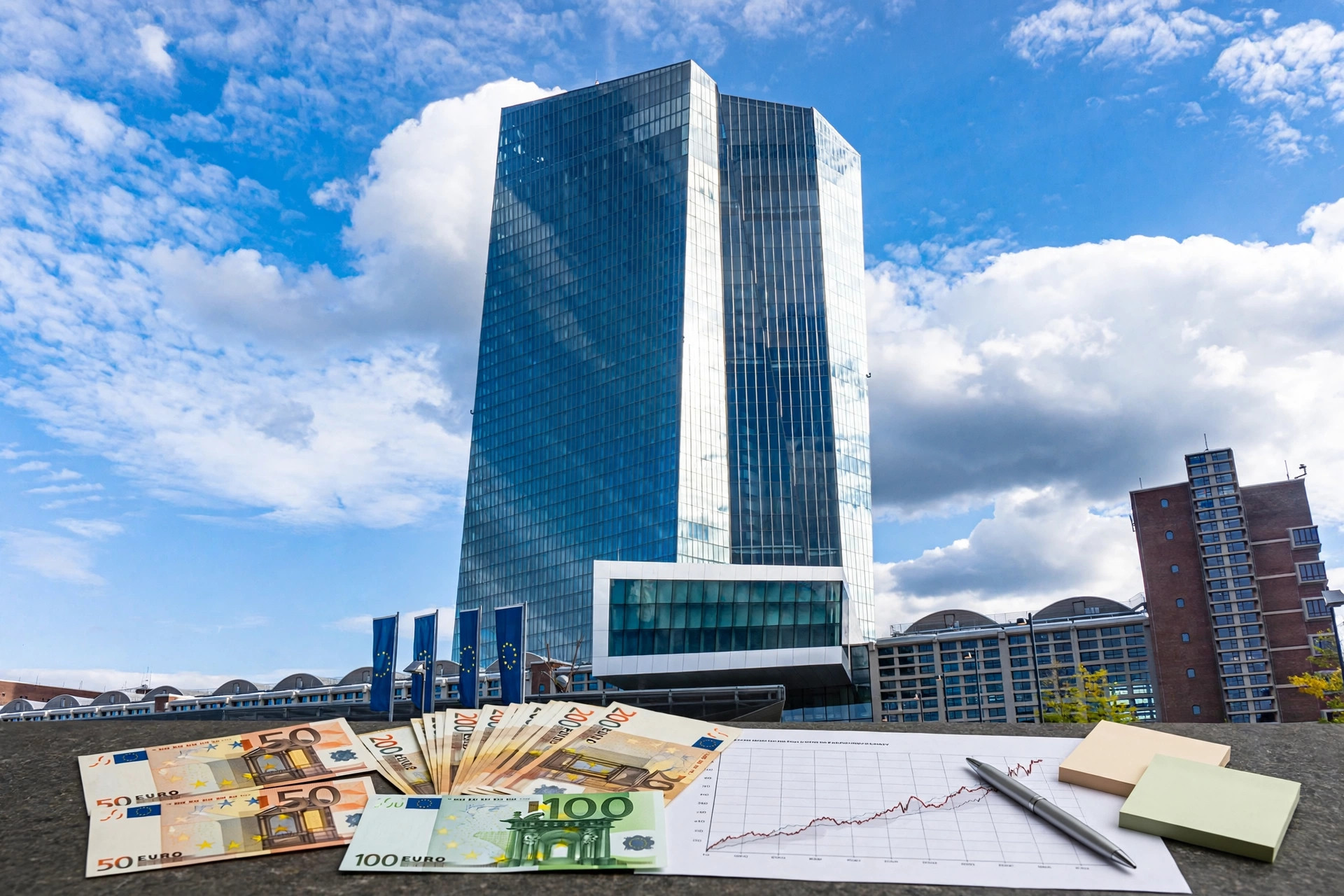
The European Central Bank looks set to raise interest rates again in December after minutes from its October meeting showed a large number of policymakers already favoured a hike last month. According to a summary of the minutes published by Continuum Economics, members agreed that unless the inflation outlook improved significantly, “the only issue was timing”, and markets are now pricing a 93% chance of a rise on 17 December.
ECB December rate hike looks near certain after October minutes
The ECB kept rates unchanged in October, but the account released on Thursday revealed a council leaning firmly towards further tightening. Continuum Economics reported that members backing an October move judged the value of waiting to be “rather small”, partly because a durable resolution of the Middle East conflict had become less likely. ING economist Carsten Brzeski said in a note, reported by Dow Jones Newswires, that the minutes confirm a December increase appears likely.
A quarter-point rise would lift the deposit facility rate from 2.50% to 2.75%. Money markets had already priced about a 91% probability of a December move, according to LSEG data cited in market reports this week. Danske Bank analyst August Hyldgaard said the account could confirm whether a December hike is a “done deal”.
Why members wanted to move in October
Those favouring an immediate rise argued the deposit rate still sits within ECB staff estimates of the neutral rate, so policy is not yet restraining the economy by much, according to the minutes summary. All members ultimately supported holding, provided communication stressed that “the direction of travel was clear, unless the inflation outlook improved significantly”. The account concluded that waiting and reassessing in December was reasonable.
The case for pausing
The argument for patience rested on stable underlying inflation, no sign yet of second-round wage effects, longer-term inflation expectations anchored around 2%, and financing conditions that had tightened since September. More data would also arrive before December, including new staff projections, wage information, third-quarter GDP and two inflation releases.
Inflation and the energy shock behind the debate
Euro area inflation reached 4.0% in October. Members agreed with executive board member Philip Lane’s assessment that energy prices had risen beyond the September staff baseline, likely lifting inflation further in the near term and keeping headline inflation well above target over the coming year, according to the summary. Underlying inflation, however, has remained broadly stable and wage growth has moderated further.
Members also agreed that tighter financial conditions and the energy spike would weigh on growth, although the size of the effect remains to be seen. Falling loan demand suggested a stronger drag on activity than seen so far, even if a weaker exchange rate might cushion some impact on investment, housing and consumption.
What happens next for eurozone rates
Next week’s November inflation release is likely to show a further modest uptick from October’s 4% rate, with core inflation expected unchanged at 2.6%, according to Continuum Economics. The 17 December meeting will also bring fresh staff projections, including a first outlook for 2029. Beyond December, Continuum Economics said the path will depend on whether higher energy prices feed into stronger wage growth, and it doubts additional hikes in 2027 are likely.
Related coverage on TradeMatrix
- Pablo Hernandez de Cos Set to Become Next ECB President
- Bank of England December Rate Hike Odds Jump to 89%
- Bank of Japan Rate Hike Odds Hit 80% as Tamura Warns on Inflation
Tags: #ECB #InterestRates #Euro #Inflation #Eurozone #MonetaryPolicy #Forex
Comments (0)