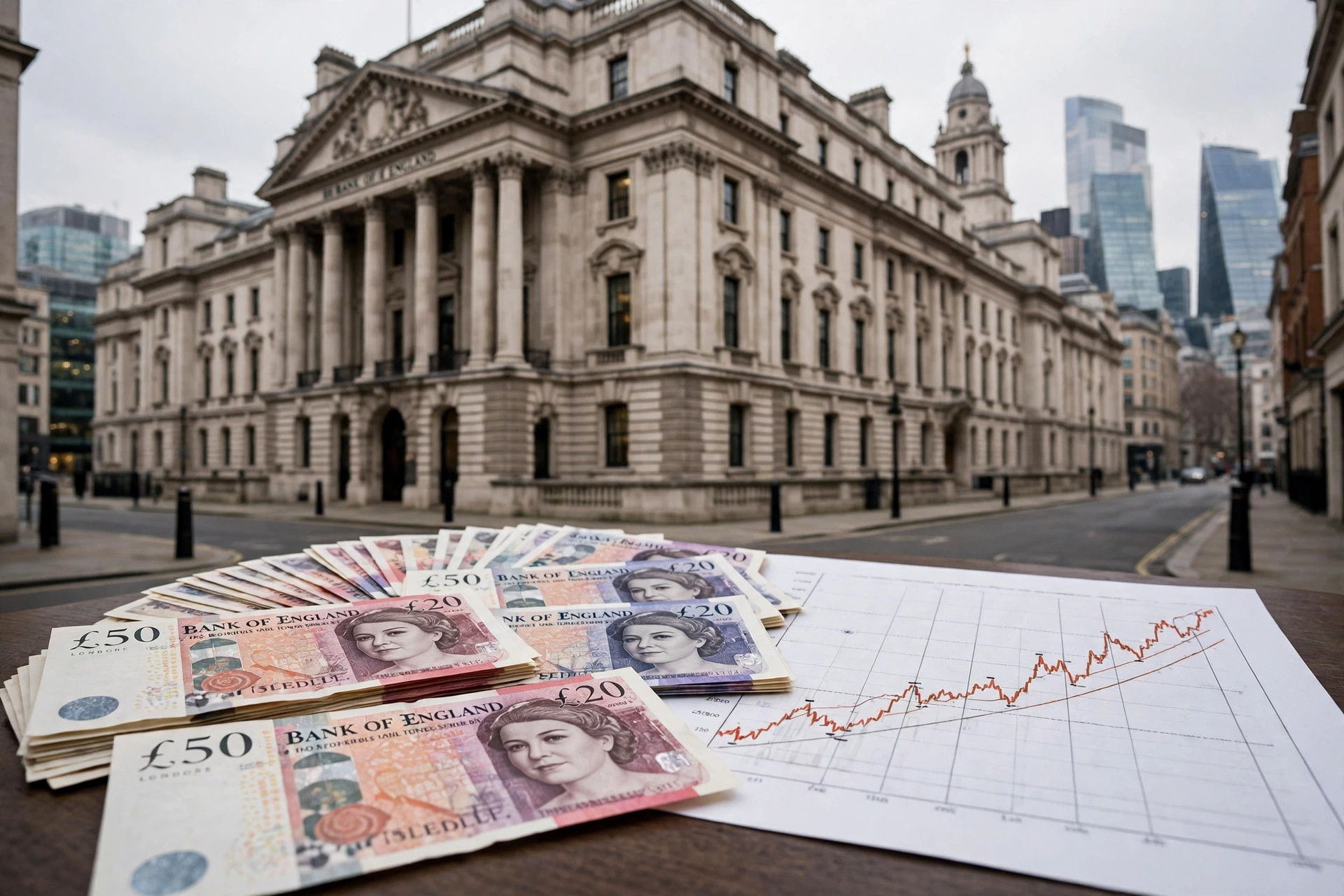
Markets have sharply raised the odds of another Bank of England interest rate rise in December, as oil prices above $90 a barrel keep inflation risks in focus. Traders now see an 89% chance of a 25-basis-point increase next month, according to LSEG data reported by Reuters and the Wall Street Journal, up from 80% on Wednesday.
Bank of England December rate hike odds climb to 89%
The repricing followed hawkish comments from senior policymakers on Wednesday. Governor Andrew Bailey, Deputy Governor Clare Lombardelli and Monetary Policy Committee member Catherine Mann said they cannot ignore the threat to inflation from persistently high energy prices, FXStreet reported. They added that they would have to respond unless a sudden Middle East resolution brings energy costs down.
The Bank's next meeting is on 17 December. Scotiabank strategists highlighted that swaps indicate around 19 basis points of implied tightening for that decision, according to FXStreet, consistent with investors leaning towards another quarter-point rise.
Investors are also looking beyond December. Markets expect three more Bank of England rate increases by July 2027, in addition to the quarter-point rise delivered in November, LSEG data showed, according to the Wall Street Journal.
Energy prices keep UK inflation risk in focus
Energy markets are central to the shift. Oil has stayed above $90 a barrel amid renewed geopolitical concerns, the Wall Street Journal reported, after Yemen's Iran-aligned Houthis claimed attacks on Saudi Arabia's Ras Tanura refinery this week, raising concerns about prolonged supply disruption.
Policymakers leave the door open
Scotiabank also highlighted that MPC member Megan Greene reinforced the Bank's hawkish bias, noting tighter policy would be appropriate absent a sudden resolution to the Iran conflict or improved data, FXStreet reported.
Bailey added a note of caution. Reuters reported that he said on Wednesday British inflation may not rise as high as the Bank forecast earlier this month if international energy prices stabilise at current levels following a fall in recent weeks. The case for another rise therefore rests heavily on whether energy prices stay high.
Gilts and sterling react to tighter policy outlook
UK government bond yields rose as investors priced in a firmer rate path. The 10-year gilt yield increased 2.5 basis points to 5.159%, Tradeweb data showed, according to the Wall Street Journal.
Sterling was steadier. GBP/USD flatlined near 1.3120 in early Asian trading on Thursday, FXStreet reported, as traders assessed the Bank's tone alongside hot US inflation data. US markets were closed on Thursday for Thanksgiving, keeping conditions thin.
The UK debate mirrors pressure in the United States, where headline PCE inflation rose 3.8% year on year in October and core PCE rose 3.3%, above the 3.2% consensus, according to Bureau of Economic Analysis data reported by FXStreet.
What happens next for UK interest rates
Attention now turns to the 17 December decision and whether energy prices stabilise or climb further before then. If oil remains above $90, market pricing suggests a December increase is the more likely outcome. If energy costs fall, Bailey's comments leave room for the Bank to judge inflation may peak below its earlier forecast.
For now, markets are positioning for the possibility that the November rise was not the last in this tightening phase.
Related coverage on TradeMatrix
- UK Unemployment Falls to 4.6% as Payrolls and Hiring Weaken
- Core PCE Hits 3.3% Three-Year High as US GDP Jumps to 4.3%
- Brent Crude Drops Below $90 as Supply Glut Fears Grip Oil Markets
Tags: #BankOfEngland #InterestRates #UKEconomy #Inflation #Forex #Gilts #OilPrices #Markets
Comments (0)