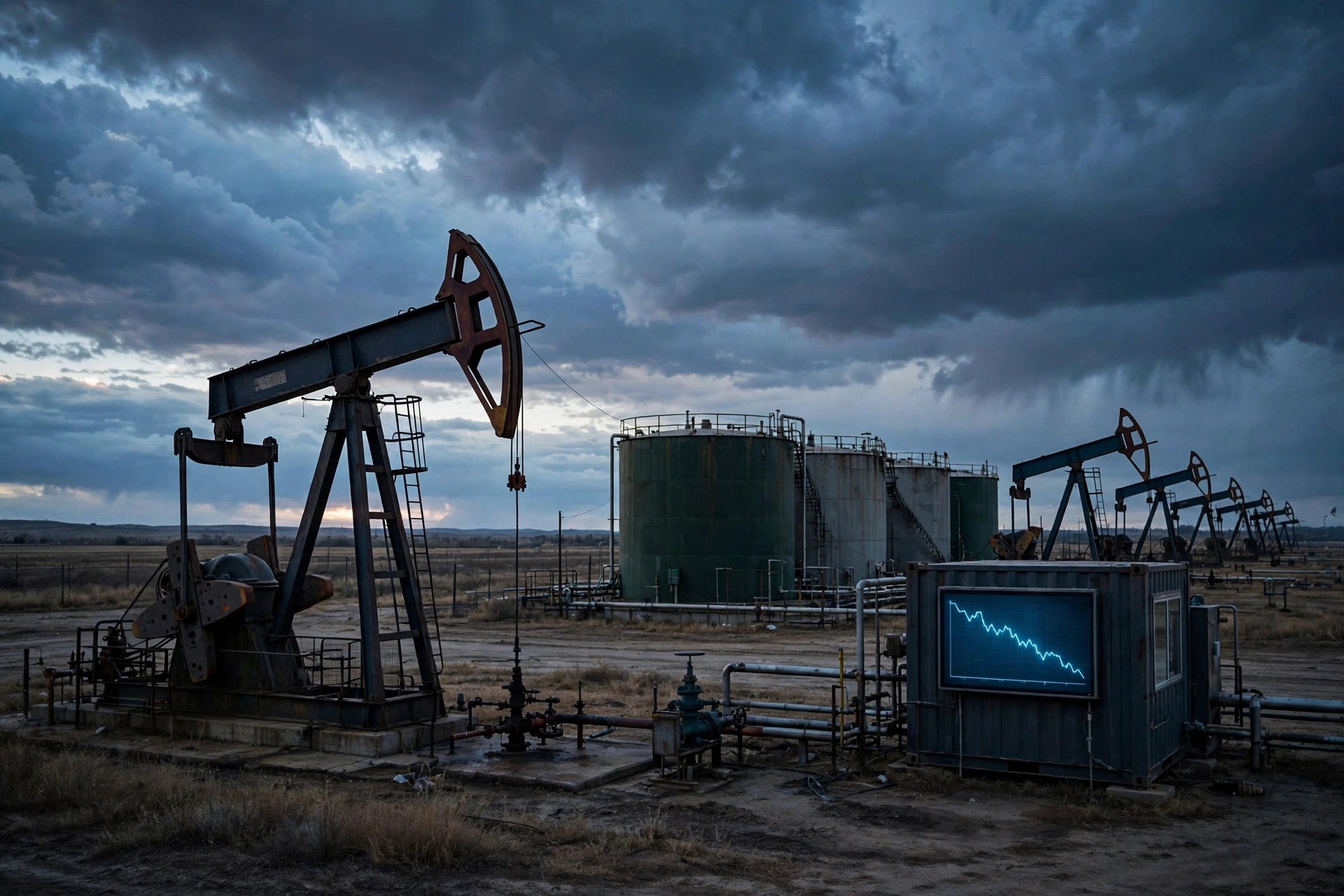
Brent crude has slipped below the psychologically important $90 a barrel level, hitting a three-month low as traders weigh a looming global supply surplus against persistent risks to shipping in the Gulf. The slide marks a sharp reversal for a market that only weeks ago was pricing in disruption risk, and it leaves oil on course for one of its weakest stretches of the year.
Brent crude falls to lowest close since August
Brent crude for January delivery fell 3.5% on Monday to $89.37 a barrel, its lowest close since 28 August, according to Reuters, and eased further in early Asian trading on Tuesday to around $88.97. US benchmark West Texas Intermediate settled down 3.9% at $80.17 a barrel on Monday, its lowest since 7 August, before slipping to about $79.94 on Tuesday. Brent is now roughly 18% below where it ended October, according to Barron's, after three consecutive weekly declines.
The trigger was supply, not demand. Libya's Sharara pipeline has reopened, with crude from the country's largest field beginning to flow into storage tanks at the Akakus facility in Zawiya, Libya's National Oil Corporation chairman told Reuters on Monday. At the same time, exports from the Gulf have recovered, adding barrels to a market already braced for surplus.
IEA sees a 2 million barrel surplus as JPMorgan eyes the $70s
The International Energy Agency, in its latest report, has projected a global oil surplus of 2 million barrels per day in the fourth quarter of 2026, citing the recovery in Gulf exports despite heightened tensions. That forecast has given traders a reason to look past the security risks that dominated headlines earlier in the month.
JPMorgan expects oil futures to fall into the high $70s a barrel in the first half of 2027, pointing to an estimated supply surplus driven by higher Middle East production outside Iran next year and more supply from the Americas, led by the United States.
Gulf shipping risks fail to lift prices
Remarkably, the sell-off has continued even as attacks on shipping in and near the Strait of Hormuz persist. Barron's reported 19 confirmed shipping attacks in the Gulf, while global onshore inventories sit at their lowest levels since at least 2016 and Chinese crude imports are climbing above 11 million barrels a day. Yet traders have focused on rising supply forecasts instead.
Hopes of a diplomatic resolution in the Middle East have also weighed on prices, with signs of renewed efforts to end the US-Iran conflict removing some of the risk premium that had supported crude earlier in the autumn.
What happens next for oil markets
The contrast with the rest of the market is striking. While oil slid, Wall Street staged a spectacular rebound on Monday, with the Nasdaq surging 6.5% and the S&P 500 jumping 4.7% after Nvidia reinstated Jensen Huang as chief executive. Gold also recovered, with spot bullion up 0.7% at around $3,658 an ounce, according to Reuters.
For oil, the next test comes from the data: traders will watch whether the IEA's surplus forecast materialises in weekly inventory figures, whether Libya's restored output holds, and whether OPEC producers respond to prices that have now fallen well below the levels most Gulf budgets assume. With Brent under $90 and momentum firmly downward, the market's focus has shifted from disruption to oversupply.
Related coverage on TradeMatrix
- Oil Holds Near $92 as Two Tankers Attacked in Strait of Hormuz
- Oil Slides Below $92 as Supply Surplus Fears Outweigh Iran Tensions
- Gold Rebounds 5% From 14-Month Low as Bessent Warns Fed
Tags: #BrentCrude #OilPrices #EnergyMarkets #Commodities #Oil #Economy #Markets
Comments (0)