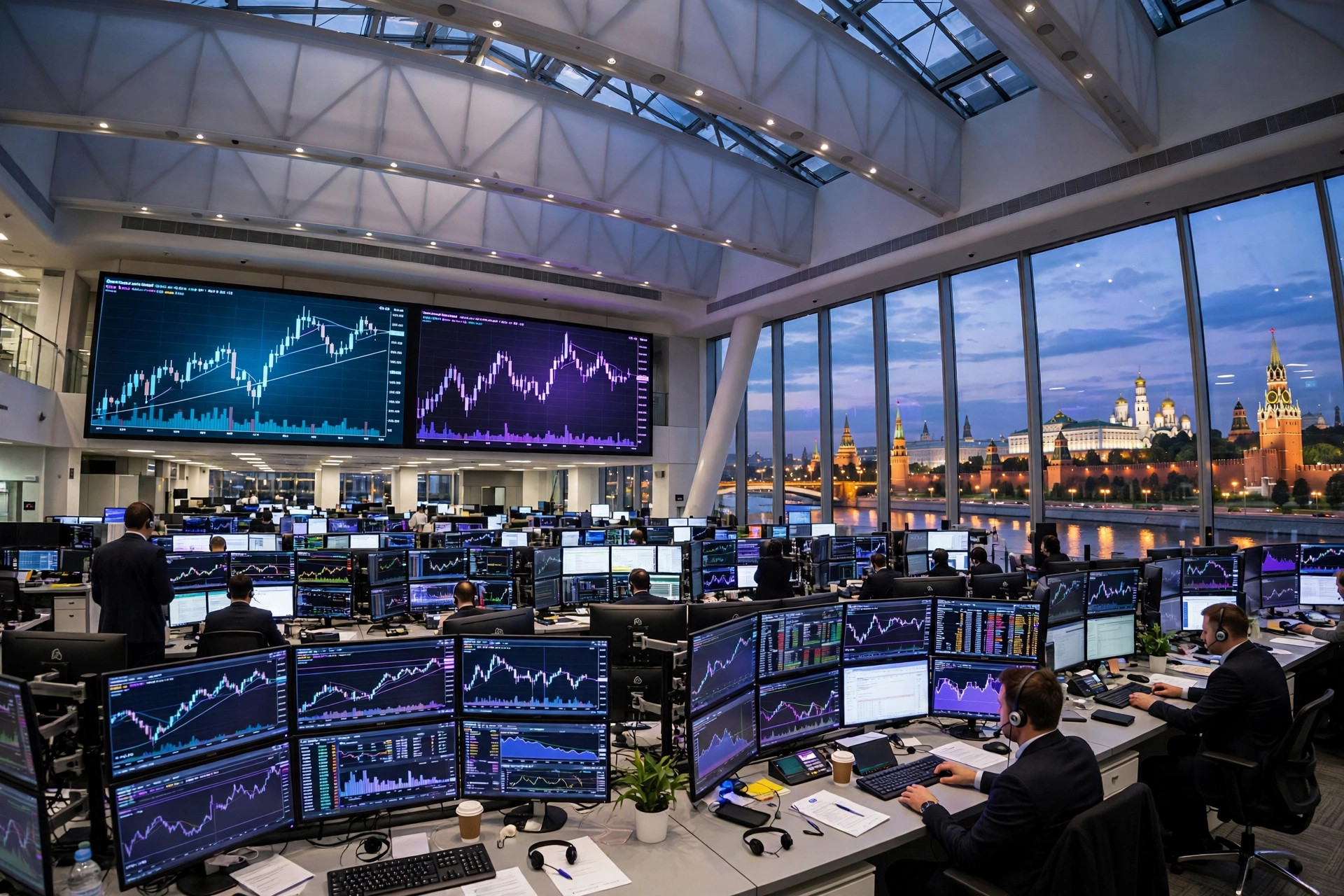
Russia's regulated cryptocurrency market reaches its first legal trading day on Sunday, 22 November, as exchanges become eligible to run organised crypto trading under rules set by the Bank of Russia. It is a milestone years in the making — but one that comes with a notable caveat: as of today, no venue has publicly confirmed that its trading rules have been approved by the regulator.
What opens on 22 November
Under an ordinance registered by the Ministry of Justice on 11 November, exchanges are authorised to begin cryptocurrency trading from 22 November 2026, provided they obtain the Bank of Russia's concurrence with their trading rules. As reported by CryptoNews, the central bank has not published a list of venues that have reached that point, and none of the four entities in the exchange register is described as a trading organiser.
The date is therefore the first day on which a Russian venue may legally run an organised crypto market — not a confirmed launch. The distinction matters for ordinary buyers: the framework's earlier steps covered custody and dealer activity, while the exchange order book itself still awaits the regulator's sign-off.
Bitcoin, Ether and USDT cleared for retail buyers
The retail side of the framework took effect earlier, on 17 November. According to the Bank of Russia's announcement of 6 November, Bitcoin, Ether and Tether's USDT are the three assets approved for public trading, chosen on market capitalisation, trading volume and at least five years of price history on foreign exchanges.
Non-qualified investors may buy up to 300,000 roubles — around $3,700 — per year through each intermediary, including brokers, trust managers and crypto exchange offices, and must pass a mandatory investor test before trading. Qualified investors face no purchase limit, but the test and risk acknowledgement apply to all investors, the central bank said.
Moscow Exchange targets 1 December
Moscow Exchange, Russia's largest securities exchange, plans to begin cryptocurrency trading on 1 December, initially through pilot transactions with professional participants, according to Interfax. Trading is expected to run from 06:50 to 23:50 Moscow time, matching its stock-market hours, with clearing through the National Clearing Centre. SPB Exchange also plans to start before the end of 2026, Kommersant reported.
A long road from ban to regulated market
The framework builds on legislation signed by President Vladimir Putin on 4 August, the law "On Digital Currencies and Digital Rights", which took effect on 1 September. On 6 October the Bank of Russia admitted the first participants under its transitional provisions: five digital depositories and four cryptocurrency exchange organisations. Sberbank, the country's largest bank, was authorised to offer crypto exchange services in October.
First Deputy Governor Vladimir Chistyukhin said in early October that the bank had changed its long-held opposition to allowing crypto into circulation because such assets had spread in Russia and cross-border payments had become harder after 2022, Vedomosti reported.
Yet the opening remains tightly fenced. Cryptocurrency still cannot be used to pay for goods and services inside Russia, direct peer-to-peer crypto trading will be prohibited from 1 July 2027, and transfers from regulated accounts to self-custody wallets are already banned. Cross-border settlements by exporters and importers are the permitted exception.
Market backdrop: Bitcoin steadies near $60,000
The regulatory opening lands in a fragile market. Bitcoin traded near $60,194 on 22 November, up about 2.2% over 24 hours but down 6% on the week, according to CoinMarketCap, after plunging to around $55,130 on Saturday — its lowest level since September 2024. The sell-off triggered an estimated $2.7 billion in leveraged liquidations, the 11th-largest liquidation event in crypto history, according to The Kobeissi Letter.
US spot Bitcoin ETFs recorded $582.3 million in net outflows on 20 November, with BlackRock's IBIT accounting for $541.1 million, and CoinMarketCap's Fear & Greed Index stood at 8, or "Extreme fear". Whether Russia's regulated opening can draw fresh demand will depend first on whether any venue actually clears the Bank of Russia's rulebook — and then on whether retail buyers, capped at 300,000 roubles a year, show up at all.
Related coverage on TradeMatrix
- CLARITY Act Stalls as Crypto Turns to SEC and CFTC Rulemaking
- Bitcoin Falls Below $60,000 for First Time Since July
- Bitcoin Nears Bear-Market Low as $1.53bn Crypto Bets Liquidated
Tags: #Bitcoin #Crypto #Russia #Regulation #Cryptocurrency #MoscowExchange #USDT #Ethereum
Comments (0)