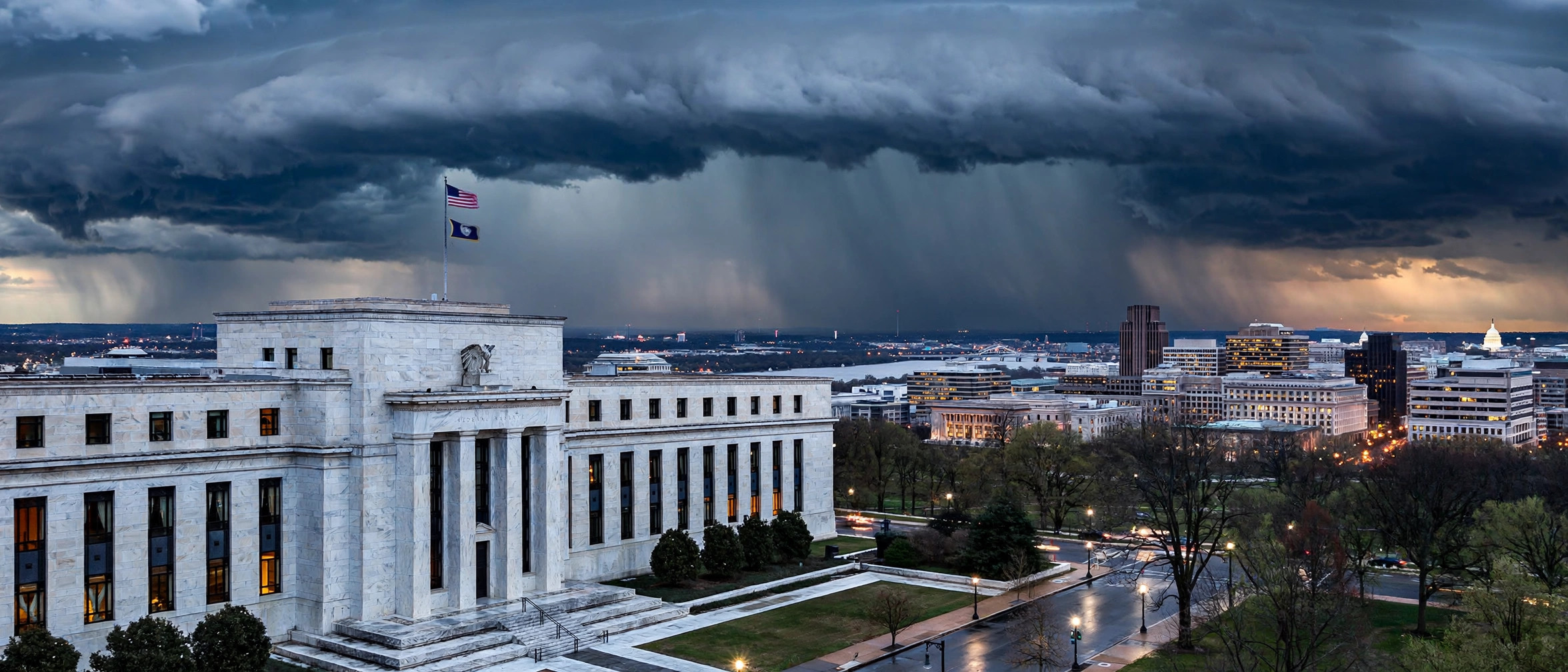
The Federal Reserve is almost certain to raise interest rates in December. The question traders are now asking is not whether the Fed hikes, but by how much — and a single inflation report, due on 25 November, may settle it. With a half-point move now on the table, that report carries unusual weight.
Fed half-point hike odds climb from zero
According to the CME FedWatch tool, futures traders on Saturday priced an 88.5% probability of a quarter-point rise at the December meeting and an 11.5% chance of a larger half-point move, with no probability at all assigned to rates staying unchanged. Prediction market Kalshi priced the same meeting at 88% for 25 basis points, 10% for 50 and 4% for a hold.
The shift has been rapid. A week earlier, on 6 November, CME assigned a 23.7% probability to unchanged rates and zero to a half-point move. The half-point option has gone from unthinkable to a one-in-nine chance in a week.
Hot CPI and PPI data changed the picture
Consumer prices rose 0.4% in October, the Labor Department said on 10 November, above the 0.3% economists forecast, while core inflation advanced 0.3%. Three days later, wholesale prices rose 6.5% from a year earlier, the biggest annual gain since November 2022.
That matters because Federal Reserve Governor Christopher Waller said on 10 November that a half-point move should be considered if core consumer prices rose 0.3% or more in October. Core prices rose exactly 0.3%. Dallas Fed President Lorie Logan added to the hawkish tone in Houston on Tuesday, saying it "may be possible to move more rapidly this winter than the FOMC has moved so far this fall."
Why the November 25 PCE report decides it
The report due on 25 November, the day before Thanksgiving, is the Personal Consumption Expenditures price index — the inflation gauge the Fed prefers. Fed Chair Kevin Warsh has said the Fed's 2% target is measured by PCE, and this is the last inflation reading the committee will see before it decides on 9 December.
The current federal funds target range stands at 3.75% to 4.00% after September's unanimous hike, the first increase since 2023. A quarter-point rise in December would lift the range to 4.00%–4.25%; a half-point move would take borrowing costs to 4.25%–4.50%. Warsh has refused to signal decisions in advance, so the PCE print is the closest thing markets have to a preview.
What a hot or soft print would mean
A soft reading could let the committee settle for a quarter point; a hot one would strengthen the case Waller and Logan have made for moving faster.
Stocks rally anyway as yields climb
Equities have taken the hawkish repricing in their stride: the S&P 500 rose 2.51% over the same week to 7,561.67, its best week since August, snapping a four-week losing streak. Bond yields tell the other side: the 10-year Treasury closed at 5.15% on 13 November, with the 2-year at 4.88% and the 30-year at 5.47%.
Riskier assets have fared worse. Bitcoin fell to about $62,100 in Asian trading on Sunday, its lowest since July, with roughly $2 billion in leveraged crypto positions liquidated over 24 hours, according to CoinGlass data cited by Bloomberg.
What happens next
All eyes now turn to 25 November. The PCE report will either cool the half-point talk or entrench it. One caution: FedWatch odds describe what traders are betting today, not what the Federal Reserve will do — the committee has not announced its December decision. But with the half-point option now priced above 10%, the 25 November PCE report has become the month's most important data release.
Related coverage on TradeMatrix
- December Fed Hike Odds Hit 80% After Hot Jobs Report
- Gold Holds $4,000 as Jobs Beat Lifts December Fed Hike Odds
- Dollar Slides to Two-Week Low as Warsh Offers No Rate Guidance
Tags: #FederalReserve #InterestRates #Inflation #StockMarket #Economy #PCE #Fed #Markets
Comments (0)