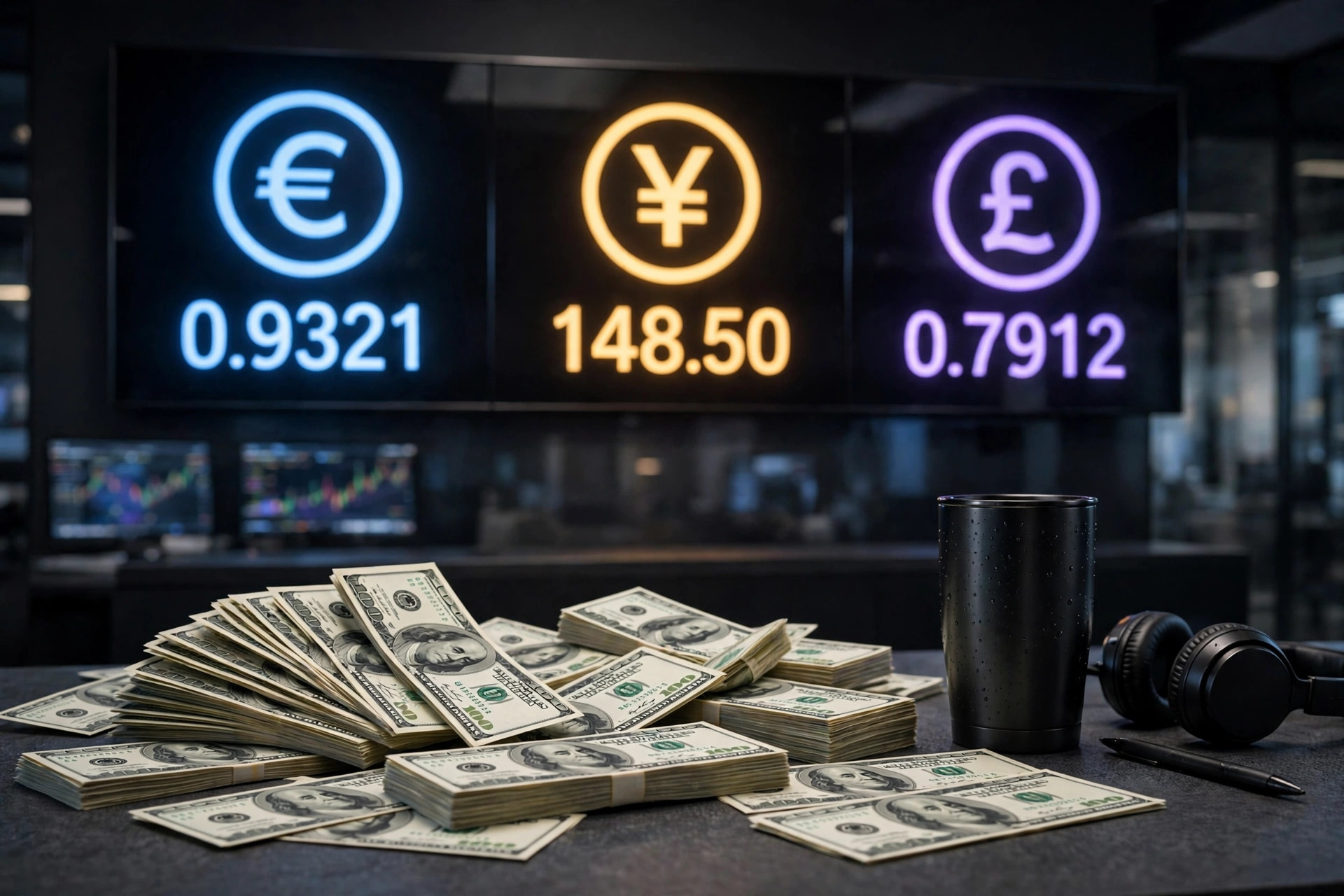
The US dollar climbed to a fresh 19-month high on Tuesday, extending a six-day rally driven by bets that the Federal Reserve will raise interest rates in December, while the New Zealand dollar sank to its weakest level since the depths of the pandemic.
The dollar index, which measures the greenback against six major rivals, rose to 103.69 in Asian trading, its highest since 2 April 2025, according to Reuters. It later eased slightly to around 103.49, but held near the top of its recent range.
Dollar rally builds on hot inflation data
The rally began after last week's hotter-than-expected US consumer price data. October CPI rose 0.4% month on month, with core prices up 0.3%, keeping inflation well above the Federal Reserve's 2% target and pushing traders to price in further tightening.
Fed officials have kept the hawkish tone going. Cleveland Fed President Beth Hammack spoke on Monday in favour of gradual rate rises to tackle price pressures, while Governor Christopher Waller has said a 25 basis point move in December could be justified, and warned that persistent core inflation could even support a larger step.
According to the CME Group's FedWatch tool, traders now view a December rate rise as close to certain, with around 4% to 6% odds on a supersized half-point increase. Prediction markets tracked by Kalshi put the chance of a quarter-point hike at roughly 90%.
Euro at 19-month low as yen nears intervention zone
The euro slipped to a new 19-month low of $1.0983 before steadying near $1.1004, while sterling fell to $1.3169 and later recovered to around $1.3200. The dollar also touched a fresh 18-month high against the Swiss franc at 0.8413.
The Japanese yen remained the market's main watchpoint. The dollar traded around 159 yen, easing to 158.90 in Tokyo afternoon trading as falling US yields and a weaker Nikkei weighed on the pair. Traders view 160 per dollar as a potential trigger for another round of Japanese intervention to support the yen.
Risk currencies under pressure
The risk-sensitive New Zealand dollar sank as low as $0.5482, its lowest since March 2020, as the global sell-off in AI stocks weighed on market sentiment. The Australian dollar dipped to $0.6724, its lowest since January, after skidding to a 10-month trough.
The tech sell-off continued across Asia, with Japan's Nikkei, South Korea's KOSPI and Taiwan's Taiex all lower, adding pressure on growth-linked currencies.
Gold slides as dollar strengthens
Gold fell to around $3,845 an ounce, its weakest close since September 2025, as the firmer dollar and sticky US yields reduced its appeal.
US 10-year Treasury yields held near 5.13%, with the two-year yield around 4.84%, as markets weighed the prospect of a December hike and further tightening into early 2027.
What happens next
Traders now turn to a busy run of US data and events. October retail sales land later today, followed by a speech from Fed Governor Waller, while Nvidia reports quarterly results after the US close. The minutes of the Federal Reserve's October meeting are also due this week and will be read closely for clues on the December decision.
The levels traders are watching are 1.0985 in EUR/USD, 1.3108 in sterling and 160 in USD/JPY.
Related coverage on TradeMatrix
- Euro Hits 19-Month Low Near $1.10 as Dollar Index Tops 103.5
- Euro Shorts Hit 11-Year Extreme as Dollar Rebounds After Hot Jobs
- December Fed Hike Odds Hit 80% After Hot Jobs Report
Tags: #Dollar #Forex #CurrencyMarkets #FederalReserve #EURUSD #USDJPY #Economy #Gold
Comments (0)